The Mission Preservation Strategist
The hardest call a president makes is which problem to solve first.
I am a strategist for presidents, provosts, and boards at mission-driven institutions: HBCUs, community colleges, and public regional universities. When federal accountability, accreditation pressure, enrollment decline, and a drifting program portfolio arrive at once, I isolate the stack, name what to solve first, and turn the tangle into a sequence a cabinet can act on.
New in the Mission Preservation Series: “The Ground Moved Again on a Monday” · September 8, 2026
A public instrument · Version 1.0, September 2026
Mission Preservation Framework
One page a president reads on Monday, one log a board reads each quarter, and the program evidence that feeds both. Built so that an institution meets federal accountability from a position of strength, and keeps the record that shows it did. Released as a public good for any institution that administers Title IV funds. No fee is attached.
Selected engagements
Where the standard goes to work.
Presented the Workforce Alignment Model at the U.S. Department of Education’s quarterly HBCU stakeholder meeting, April 2026.
A retreat presentation for the HBCU Executive Leadership Institute at Clark Atlanta University on artificial intelligence, workforce development, and what both now ask of HBCU executive leadership, with the technology treated first as a leadership question. July 2026.
Co-led a session at Johnson C. Smith University’s provost retreat on what artificial intelligence asks of academic leadership: where AI belongs in curriculum, where human judgment is non-negotiable, and how a college names its standard before the technology names it instead. July 2026.
Designed and delivered the leadership workshop for Wilberforce University examining what an 88% enrollment surge, Wilberforce’s own achievement, concealed underneath: the alignment, capacity, and compliance questions that growth defers. The engagement produced a presidential strategic report on workforce alignment. 2025.
Workforce Alignment Model distributed at UNCF UNITE, July 2026.
Three situations I am built for
For the president or provost
The earnings rule is final. The first deadline is August 31.
The federal Earnings Accountability rule (91 FR 40136) was published July 1, 2026. Its Direct Loan provisions take effect August 31, 2026; the remainder takes effect July 1, 2027. Programs whose graduates cannot out-earn a high-school graduate in their state face the loss of Direct Loan eligibility, and a first program failure opens exactly three institutional doors: a five-year loan suspension that preserves Pell access, an orderly teach-out, or no action, which forfeits the other two permanently. One of those doors closes with the August 31 amendment window.
The compliance office can run the numbers. What it cannot do is make workforce outcomes part of how your institution thinks: how deans defend programs, how the cabinet sets priorities, how the board reads risk. That shift is the work I do, and it begins with reading your exposure program by program, before the federal calculation reads it for you.
For the board chair
When the institution’s future is on the line, you need clarity fast.
Enrollment that will not recover, an accreditor’s warning, a financial-responsibility score sliding, a leadership transition in the middle of it all. A board carries the fiduciary weight, and the pressures are interconnected and moving quickly. You do not need another study. You need a strategist who has stood in the hardest version of this and can name what to protect first.
I work directly with boards and presidents to separate the existential from the merely urgent, and to hand leadership a defensible sequence: what to do this quarter, what can wait, and what to tell the people watching.
For the community college or workforce-focused institution
Workforce Pell is live. The dollars follow the institutions that can prove alignment.
As of July 1, 2026, Pell grants fund short-term workforce programs for the first time in the program’s history, but only for programs that can demonstrate completion, placement, and earnings against federal thresholds. Most institutions know which programs they want to qualify. Far fewer hold the program-to-labor-market evidence that survives federal scrutiny.
I build that evidence base: program-by-program alignment against regional occupational demand, wage data, and the federal crosswalk that determines eligibility: the same architecture behind my work with Pennsylvania’s community colleges, including the Community College of Philadelphia’s Energy Training Center.
Where this work has run
Led the strategy that carried Cheyney University from a decade under Heightened Cash Monitoring to its June 2024 accreditation reaffirmation and a June 2025 exit from federal cash monitoring.
At Wilberforce University, an 88 percent enrollment surge was concealing a graduation-rate split and a $960K revenue gap; the leadership workshop I designed converted that growth into a sequenced cabinet agenda and measurable commitments.
With the Community College of Philadelphia, built the Energy Training Center collaboration and articulation architecture linking programs to the region’s labor market.
At Shippensburg University, created the President’s Leadership Academy: faculty and staff developed together as a leadership bench, built from root-cause analysis of the university’s own problems.
From the Pennsylvania Secretary of Education’s office to the PASSHE Chancellor’s office: workforce intelligence and strategy across a fourteen-university public system.
AI workforce-literacy architecture for the United Arab Emirates and labor-market alignment for West Bengal, India: the same discipline, adapted to a country’s own data and policy.
The Method
Before strategy, isolate the problem.
FrameShift is the diagnostic I run before any plan, workshop, or retainer begins. A president rarely faces one problem; she faces a stack of them, arriving at once and competing for the same attention and the same dollars. FrameShift separates the urgent from the merely loud and finds the problem whose solution unlocks the others.
- 01 Isolate. Surface the full stack from the institution’s own data: compliance exposure, completion, program-to-labor-market alignment, enrollment, revenue, leadership.
- 02 Sequence. Name the one problem that, solved first, reduces the others, and the order of everything that follows it.
- 03 Activate. Hand the cabinet a prioritized agenda, and the standing strategy to execute it.
The discipline is the judgment to say, with evidence, this one first.
Cheyney University, the nation’s first HBCU
From problem stack to a named model
Applied to the federal-accountability and workforce pressures facing the institution, FrameShift produced the Universal HBCU Workforce Alignment Model, a framework that maps academic programs to occupational demand and earnings outcomes, turning a compliance obligation into a strategy for positioning.
Wilberforce University
From surge to sequence
An 88 percent enrollment surge, exceptional in a sector bracing for the enrollment cliff, was masking a completion split between Pell and non-Pell students, an earnings gap against the regional market, and cabinet collaboration that had not scaled with the growth. FrameShift isolated what the momentum was concealing, and the leadership engagement converted it into a sequenced agenda with named accountability.
Engagements
Three focused engagements.
Each engagement begins where the institution stands and ends with a roadmap a cabinet can act on. The frameworks are the method. The result is position.
Compliance-to-Recertification Strategy
For institutions under Heightened Cash Monitoring, accreditation pressure, or Title IV scrutiny, I map the path from federal risk to full standing, the work I led at Cheyney through its June 2024 accreditation reaffirmation and removal of probation.
Workforce Alignment Under Federal Accountability
Using the Universal HBCU Workforce Alignment Model, I position academic programs against the Workforce Pell rule, the Workforce Innovation and Opportunity Act (WIOA) earnings standards, and the federal crosswalk that links instructional programs to occupations (CIP-SOC), so an institution knows which programs qualify and where labor-market demand is real.
Strategic Positioning: The Ground Beneath Us Assessment
For leaders navigating accreditation reform, governance pressure, and the tension between mission and market, I provide the diagnostic: where the institution stands, what it can defend, and how leadership should position.
Engagements are scoped to fit within standard institutional purchasing authority, so a cabinet can authorize the work without a competitive procurement process. The FrameShift diagnostic is fixed-fee; for most institutions it clears the sole-source threshold with one signature. Every engagement is a fixed fee, quoted after one conversation that isolates its specifics.
The Retainer
The Mission Preservation Retainer
Federal accountability is not a deadline an institution clears once. Workforce Pell took effect July 1, 2026. The Department of Education’s new earnings-accountability framework begins producing program-level calculations in 2027. Accreditation reform is moving through negotiated rulemaking now. The retainer gives a president standing access to the strategist who has already taken an institution through federal scrutiny, before the stakes arrive.
Why a retainer
Most consulting arrives as a project: scoped, delivered, closed. The new accountability environment does not work that way. Rules move monthly, earnings data refreshes annually, and the decisions that determine an institution’s federal position (which programs to grow, which to restructure, what to tell the board) arrive on Washington’s calendar, not the institution’s. The retainer keeps the strategy current between decisions. Retainer institutions answer a Department letter from analysis already on file.
It is built on a conviction from my years inside institutions: strategic capacity should live in the cabinet. Every session and every memo is designed to leave your team more fluent in the federal landscape than it was the month before.
What the retainer includes
- A standing monthly session
75 minutes with the president or cabinet, on the decisions in front of you that month.
- A monthly Federal Accountability Memo
Written for your institution alone: what moved in Washington, and what it means for your programs, your portfolio, and your board.
- A direct line between sessions
When a rule drops or a program officer calls, you reach me directly, with a response inside 2 business days.
- A quarterly program-exposure review
Your portfolio, program by program, against the newest federal earnings data, the early-warning instrument for the 2027 calculations.
Retainers run in 6-month terms, structured and priced so that most institutions can authorize them within existing purchasing authority, without a competitive procurement process. Terms begin with the new fiscal year.
Government & Workforce Systems · International
The same structural problem, in more than one country.
The accountability structure is the same whether the instrument is a United States federal earnings rule, a national skills quota, or a state government’s commitment to keeping its graduates employed at home. A government sets a workforce-participation target and attaches consequences to institutions for missing it; the institutions are then expected to produce graduates whose skills justify the target. This practice works at that intersection, in the United States, and increasingly abroad. The distance between the mandate and the outcome is closed the same way in either place: labor-market intelligence, program-to-occupation alignment, credentialing pathways, and quality assurance, built here and adapted, never transplanted, to a country’s own data, language, and policy.
United Arab Emirates
AI Workforce Literacy
The mandate is concrete: private-sector Emiratization targets carry financial penalties, and a national AI strategy has advanced faster than any standardized way to certify that the workforce is ready for it. The engagement is a 220-hour, four-tier, stackable AI workforce-literacy curriculum that adapts the United States Department of Labor’s AI Literacy Framework to the Emirati context: bilingual, customizable by sector, and tied directly to employer and Emiratization outcomes. It is a complete engagement model, developed with a partner inside the region and built for a commissioning institution to deploy.
West Bengal, India
Labor-Market Intelligence & Higher-Education Alignment
The state has made keeping its graduates employed at home a priority, and its higher-education system is moving into alignment with national education and credentialing frameworks. The engagement is twofold: a state labor-market intelligence and graduate-outcome system that shows where demand and wages sit, and a program-to-occupation alignment model adapted for the state’s universities and colleges. The work is mapped to the government’s own priorities and to the realistic channels through which an external advisor contributes.
Featured analysis
Scale Without Sightlines: West Bengal’s Higher Education and the Case for Workforce Alignment
A data-informed study of the state’s higher-education landscape: its scale, the gap between what its institutions produce and where the economy hires, and the workforce-alignment strategy that gap calls for.
The practice complements a country’s own institutions and experts rather than substituting for them. The aim is to leave local teams more capable than they were, the same conviction that governs the work at home.
The institutions that endure are not the ones that protect the past. They are the ones disciplined enough to move the mission into conditions their founders never imagined.
Mission discipline over mission nostalgia
How I work
An engagement that produces decisions.
Begin with the ground
The first work is honest assessment: where the institution stands against federal requirements, labor-market reality, and its own stated mission. The sequence that follows is built from it.
Sequence for position
Compliance work is ordered so that each step produces strategic advantage, not just a satisfied requirement. The roadmap is built for the institution’s margins, leadership, and timeline.
Leave the cabinet able to act
The engagement closes with a roadmap a president and cabinet can move on within two quarters, defensible to a board, to an accreditor, and to the Department of Education.
Strategy, with operations left where they belong. I build the model that reads an institution’s federal exposure and the agenda that responds to it. Financial aid operations, loan counseling, and Title IV disbursement stay with the aid office and its servicing partner, where they belong. The model tells the institution what those functions now have to deliver.
Frameworks
The intellectual architecture behind the work.
Two proprietary frameworks distinguish the practice. They are the reason an engagement produces strategy rather than a compliance checklist.
The Method
Universal HBCU Workforce Alignment Model
A sector-level framework of five interlocking systems that converts the new federal accountability architecture into an instrument of institutional strength. Field-tested at Cheyney University through its passage from Heightened Cash Monitoring to its June 2024 accreditation reaffirmation, generalized for all 106 HBCUs, and deployed to the sector through NAFEO; presented at the April 2026 HBCU quarterly meeting with the Secretary of Education.
- 01 Earnings Indicator Readiness. A program-by-program audit against the federal earnings threshold: the early-warning heat map, run before the first federal calculation arrives in 2027.
- 02 CIP-SOC Crosswalk & Workforce Intelligence. A three-source validated mapping that expands the federal program-to-occupation crosswalk three- to fourfold. One criminal justice program: four occupations under the federal map, fifteen under validated employer data. That difference separates a program that appears to fail the earnings test from one that demonstrably passes.
- 03 AI Workforce Readiness. Curriculum architecture mapped to the Department of Labor’s AI Literacy Framework and structured for Workforce Pell eligibility.
- 04 Work-Integrated Learning. Supply-demand gap analysis, registered apprenticeship pathways, and stackable credentials built to the 70 percent placement standard.
- 05 Mission Value Evidence. Documentation of what the earnings test cannot see, drawn from the same federal tax-record research base that powers the accountability framework itself. HBCUs move students from the bottom 40 percent of household income into the middle class at 4.6 times the rate of Ivy Plus institutions.
A companion model for the nation’s 37 Tribal Colleges and Universities was built as co-equal architecture: six metrics that measure what TCUs create, in labor markets the federal earnings test was not designed to see.
The Diagnostic
The Ground Beneath Us Strategy
A diagnostic for leaders facing accreditation reform, governance pressure, and the pull between mission and market. It establishes where an institution stands, what it can defend, and how its leadership should position itself in a shifting federal landscape. The result is a defensible position statement the president can carry into the next board meeting.
The Standard
Disciplinary Depth. Human Judgment. AI Fluency.
Three requirements, one standard: the capacities that now decide a graduate’s standing. Depth comes first because it is the precondition: artificial intelligence produces plausible surface, and only depth catches the confident error. Judgment comes second because it is depth in action: the weighing, the contextual read, the accountable call, the one capacity the technology cannot supply and the one the market now prices at a premium. Fluency comes last, and the placement is the argument: command of the tool sits on top of the capacities that direct it. A graduate who holds all three clears the two tests now pricing a degree: the employer’s and the federal government’s. Depth and judgment are built over years and do not decay; fluency turns over with every product cycle. Every alignment model I build and every curriculum I architect points at this standard: build on what lasts.
The successor to this practice’s oldest conviction: serviceability over employability.
Writing
Landscape & Policy analysis for the people who have to act on it.
I write as The Mission Preservation Strategist for presidents, provosts, chief financial officers, and the federal policy professionals who shape the environment these institutions operate in. The work reads policy the way a practitioner reads it: for the decision a leader faces in the next ninety days.
Latest from the Substack
Two provisions took effect August 31 and run through the agreement a president signs; what a leadership team can do in the 10 months before the first numbers arrive.
Manuelito’s words open the tribal college essay; the mission preservation questions HBCUs and TCUs face travel together.
The Secretary’s National Call to Action, connected to the regulatory standard where the same two words carry enforceable weight.
- 01 Federal higher education policy
- 02 HBCU institutional strategy
- 03 Workforce & labor-market intelligence
- 04 Artificial intelligence and the future of work
- 05 Institutional governance & compliance
Resources
Tools you can use before we ever speak.
Each of these is a working tool in its own right; most are the front edge of the method I bring to an engagement, and one is a public instrument for student governments. Download any one, or write me and I will send the full set with a short note on which fits your situation, at no cost.
What is in front of you right now?
The diagnostic
Presidential Problem-Stack Diagnostic
The FrameShift questions in miniature: surface the stack your cabinet is carrying, and begin to name what to solve first.
Download (PDF) →The readiness check
Federal Accountability Readiness Brief
A checklist a cabinet can answer in one sitting to see where the institution stands on Workforce Pell, earnings accountability, and accreditation reform.
Download (PDF) →The alignment tool
Program-to-Labor-Market ROI Worksheet
The Workforce Alignment Model in miniature: test one program against regional demand and earnings, and see where it is aligned or silent.
Download (PDF) →The estimator
Near-Completer Opportunity Estimator
Thirty-seven million working-age adults hold some college and no credential. Select your state, see the high-yield pool within reach, and the one number no public dataset can supply.
Open the estimator →The framework
Mission Preservation Framework
One page a president reads on Monday, one log a board reads each quarter, and the program evidence that feeds both. Version 1.0, released as a public good for any institution that administers Title IV funds.
Open the framework →The governance instrument
Governing the Exponential
An AI governance stand-up instrument: twenty-four items across six domains, now including the board’s own practice, a ninety-day docket, and a board-ready charter draft assembled from your ratings. Everything stays in your browser.
Open the instrument →The approval lab
Workforce Pell Approval Risk Lab
Which requirement will block your proposal first? Federal design gates, state occupation-list logic, and outcomes risk, diagnosed in one pass. Pennsylvania verified; nine state archetypes, labeled.
Open the lab →The model charter
The Model Student AI Council Charter
Students already decide the disposition of tens of millions of dollars in campus fees and already sit as voting trustees. This instrument extends that precedent to the AI tools they are handed: consultation before signature, review of the data terms, and consent before those terms take effect. Written so a student government could adopt it this fall.
Open the charter →The map
The First Rung Map
Where a program family’s graduates work, the state earnings floor those programs face under the July 2026 rule, and how exposed each destination is to AI. One body of evidence, read three ways: student, president and trustee, and the hope map.
Open the map →Prefer them by email? Write me and I will send the full set →
Questions presidents and boards are asking
What is the Earnings Accountability rule?
It is the accountability framework created under the One Big Beautiful Bill Act, developed through the AHEAD rulemaking and finalized as the Earnings Accountability rule (91 FR 40136), published July 1, 2026, with Direct Loan provisions effective August 31, 2026, and the remainder effective July 1, 2027. Programs whose graduates’ median earnings fail to exceed those of working adults with only a high-school diploma in the same state, in two of three consecutive years, lose Direct Loan eligibility; Pell access is treated separately. A first program failure opens three institutional decisions, and the first amendment window closes August 31, 2026. The first program-level calculations are expected in 2027, which means the decisions that shape those results are being made now.
Is this a compliance task or a leadership problem?
Both, but the harder part is leadership. A compliance office can calculate the metrics. Making workforce outcomes part of how deans defend programs, how a cabinet sets priorities, and how a board reads risk is a culture shift. That is the work I lead with presidents and provosts.
Do you manage financial aid or Title IV disbursement?
No. Financial aid operations, loan counseling, and disbursement stay with the aid office and its servicing partner, where they belong. I build the strategy and the program-exposure model that tells those functions what the new rules now require.
How does an engagement usually begin?
With a confidential conversation, then FrameShift, a fixed-fee diagnostic that surfaces the full problem stack and names what to solve first. From there, a focused engagement or a standing retainer, depending on what the institution needs. The readiness tools below are a no-cost place to start.
Speaking
Translating Washington for the people who have to act on it.
I speak to boards, cabinets, and convenings on the new federal accountability environment and what it asks of mission-driven institutions, turning the movement in Washington into decisions leaders can make. Sessions are built for the room: a board retreat, a cabinet workshop, a keynote, or an association convening.
Invite me to speak →- 01 Compliance as competitive strategy
- 02 Workforce Pell & the new earnings tests
- 03 Accreditation reform & institutional position
- 04 HBCU and mission-driven institutional strategy
- 05 The graduate standard: disciplinary depth, human judgment, AI fluency
About
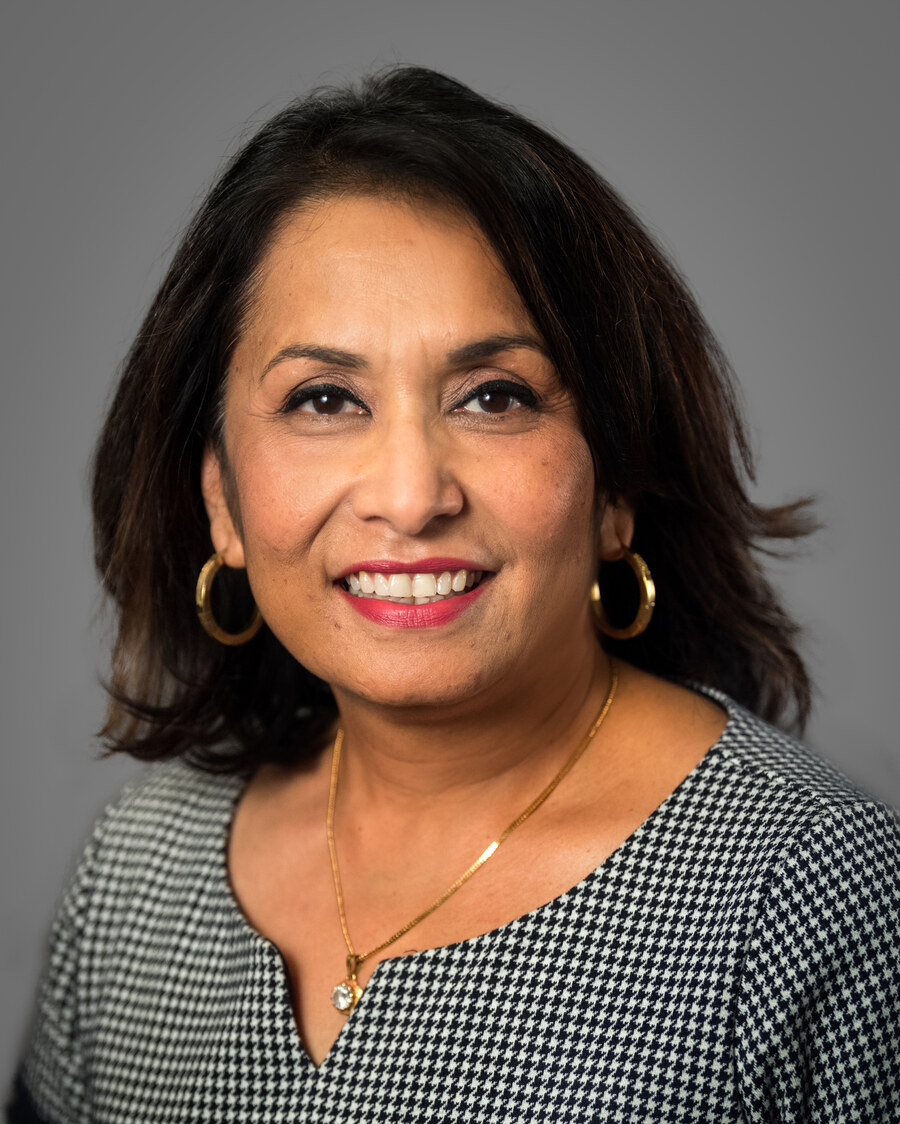
Dr. Sue Mukherjee is Principal of Mukherjee & Associates LLC, a consulting practice focused on Title IV compliance, federal accountability, and strategic transformation for HBCUs and mission-driven institutions. She works at the intersection of higher education, workforce development, and labor market information, with expertise built over more than twenty years across state government, a fourteen-university public system, a predominantly white institution, HBCUs, and Pennsylvania’s community colleges. Her work spans the full student lifecycle, using data-driven decision-making and technology to strengthen the systems that drive retention, completion, and institutional viability. She continues to serve Cheyney University of Pennsylvania, the nation’s first HBCU, as Strategic Initiatives Executive.
At Cheyney, Dr. Mukherjee led the decade-long transformation from Heightened Cash Monitoring 2: accreditation reaffirmed and probation removed by the Middle States Commission on Higher Education on June 27, 2024; a full exit from Heightened Cash Monitoring on June 2, 2025, with the next evaluation visit scheduled for 2030–2031; and the institution’s Title IV recertification submitted 63 days ahead of deadline. That work produced a core conviction that anchors her practice: compliance is not a burden to manage; it is competitive strategy for mission-driven institutions. She is the architect of the Universal HBCU Workforce Alignment Model, a framework that helps institutions turn federal accountability requirements into tools for strategic positioning.
Dr. Mukherjee’s workforce development work has extended deeply into Pennsylvania’s community college sector, including collaboration with the Community College of Philadelphia on the creation of its Energy Training Center and the development of articulation agreements. That work spanned roles from the Secretary of Education’s office to the Chancellor’s office at the Pennsylvania State System of Higher Education, Shippensburg University, and Cheyney.
Sue currently serves as a Peer Evaluator for the Middle States Commission on Higher Education, as Executive Advisor and Senior Researcher for the National Association for Equal Opportunity in Higher Education (NAFEO), and as Chair of the Finance Committee for MACH2, the Mid-Atlantic Clean Hydrogen Hub. She writes regularly on federal higher education policy, HBCU institutional strategy, and institutional sustainability at suemukherjee.substack.com.
Dr. Mukherjee is a Fellow of Harvard University’s Strategic Data Project and Clark Atlanta University’s HBCU Executive Leadership Institute. Her career path, from middle school teacher in West Bengal to senior strategist at America’s first HBCU, shapes the problems she pays attention to and the way she solves them. She holds a Ph.D. in Administrative Leadership Studies from Indiana University of Pennsylvania.
Based in Connecticut, working nationally
Contact
Let us talk about where your institution stands.
I work with presidents, provosts, and boards navigating federal accountability, accreditation, and workforce alignment, on standing retainer and in focused engagements. Every conversation is confidential, and you reach me directly. No intake forms, no junior associates. I reply personally, within one business day.